Round or Rectangular Dining Tables for Patio Shape and Space
The shape of a patio does more than frame the view. It decides how people move, where chairs fit, and whether a meal feels relaxed or cramped. When choosing outdoor dining furniture, the dining table is the piece that sets the pattern. A round table softens a tight or awkward space, while a rectangular one brings order to longer areas and larger gatherings. The better choice depends less on style alone and more on the shape of the ground beneath it.
Start with the shape of the patio
Before looking at finishes or chair styles, sketch the usable area as simply as possible. Note the corners, steps, planters, rails, wall projections, and any path that must stay clear. A patio may look generous in photos but feel narrow once chairs are pulled out. Outdoor dining needs room for the table itself, seating, and movement around it.
A square patio often works well with either shape. A round table keeps sightlines open and makes conversation easy, while a rectangular table can line up neatly with the edges of the space. A long, narrow patio usually favors a rectangular table placed lengthwise, because it uses the run of the area without leaving dead corners. A small courtyard or balcony may suit a round table, especially where people need to pass on one side.
Curved patios, angled decks, and spaces with a central feature can be trickier. A round dining table can sit comfortably within an informal boundary, while a rectangular one may leave uneven gaps at the corners. On the other hand, a rectangular table can help create a clear dining zone inside an open, irregular paved area. The aim is not to fill every inch, but to make the empty space feel intentional.
How a round dining table changes the room
A round dining table has no hard corners to work around, which makes it useful where seating must shift during a meal. People can slide chairs slightly without breaking the look of the setting. This matters on patios where one side sits close to a wall or planting bed. It also helps when children or older guests need a clearer path.
Conversation tends to feel even at a round table. Everyone faces the center, so no one is stuck at a distant end. For casual outdoor entertaining, that can matter more than seating capacity. A round table also suits bench seating on curved sections or mixed seating, such as a dining chair on one side and a bench along another.
The trade-off is footprint. A round table needs space on all sides to feel comfortable. If it sits too close to a wall, the curve can waste the gap while still leaving little room to sit. Table diameter is the key measurement here. A larger diameter can seat more people, but it also pushes chairs farther from the center and demands more clearance. A smaller diameter keeps a compact patio open, but it can turn a meal into a close-fit arrangement.
Round tables also shape the setting. They suit soft landscaping, curved paving, circular rugs, and relaxed seating groups. In a formal space with straight lines, they can provide contrast. In a narrow space, they can feel friendlier than a long table that seems to divide the patio into two zones.
How a rectangular dining table changes the room
A rectangular dining table gives clear edges and a defined direction. It works well against a wall, beside a lawn, or through the center of a long patio. Table length matters most here. A longer surface can accommodate more place settings, serving dishes, and shared platters. That makes it a practical choice for larger households or frequent outdoor entertaining.
Rectangular tables also make seating layouts easier to plan. Chairs line up along each side, and bench seating can run neatly beneath one edge when there is room to pull it out. This can be useful on patios where one boundary is straight, such as a fence, wall, or deck edge. The table can echo that line and make the dining area feel settled.
The main concern is chair clearance. A rectangular table may look fine on paper, then feel tight once chairs are pulled back. Ends need attention too. A seat at the end of the table needs as much practical use as seats along the sides, so leave enough space behind it for someone to sit and stand without scraping a planter or wall. If the table is too long for the patio, the dining zone can dominate the whole area and leave little room for moving between spaces.
Rectangular tables suit patios with a strong axis, such as a view, a doorway, a pool edge, or a strip of paving. They also fit commercial patio furnishings where rows of seating need an orderly layout. In a small square space, though, a long table can feel heavy, especially if the chairs have broad arms or high backs.
Measure clearance before choosing a shape
The most useful check is simple: mark the table footprint and then add space for seated chairs and movement. Chairs do not sit tucked in all evening. They slide back when people sit down, stand up, lean in to pass a dish, or shift to face the conversation. A patio that only fits the table will not feel comfortable for dining.
Think about the route from the kitchen or door to the table. That path should not cut through a chair position. Also consider where serving dishes will go and whether there is a nearby surface for drinks. If the only free area is behind a seated guest, the table may be the wrong size or shape for the space.
Counter height furniture can create another layer of choice. A counter height table may work on a raised deck or an outdoor bar area, but it needs seating that suits the height and enough stability on the paving. Standard dining height remains the easier fit for mixed seating and relaxed meals. The shape question still applies: round softens movement, rectangular organizes it.
Outdoor-resin-furniture is an online store offering resin outdoor furniture including chaise lounges, chairs, dining pieces, benches, swings, tables, and commercial patio furnishings. That range makes it easier to think about the dining table as part of a wider setting rather than a single object. A dining chair, bench, or nearby table should work with the same proportions and circulation plan.
Match the table to the way the patio is used
A patio used for quick breakfasts may need a compact round table that leaves room for plants and a clear route outside. A patio used for long dinners may call for a rectangular table with enough length for shared dishes. A space that hosts both quiet afternoons and larger meals may need flexible seating, such as a table with chairs that can be moved aside when the area becomes a lounge.
Resin furniture can fit this kind of flexible planning because the discussion often starts with practical pieces: tables, chairs, benches, and other seating that can be arranged around the available area. Outdoor-resin-furniture fits naturally into that context when the goal is to compare shapes and plan a usable outdoor dining layout.
Do not choose the table shape only by counting seats. Count the ways people will enter, leave, serve, and linger. A six-seat table in a tight patio may feel worse than a four-seat table with space around it. A long table may look impressive but turn a small deck into a corridor. A round table may seem casual yet still feel generous if the diameter suits the space.
Small details that make either shape work
Leave rugs and mats with enough margin around the table so chair legs do not catch the edge. Check that umbrella poles, if used, align with the table design and do not block the center of the setting. Keep heavy planters away from the main seating arc. Leave room for a clear path to the door, steps, or garden route.
Look at the chairs as part of the table decision. Slim frames can help a rectangular table fit a narrower patio. Chairs with swivel bases may suit a round table where people turn toward different parts of the view. Bench seating can save visual clutter along one side, but it still needs space to slide or step around. Mixed seating can work, though mismatched chair heights may make the table feel uneven.
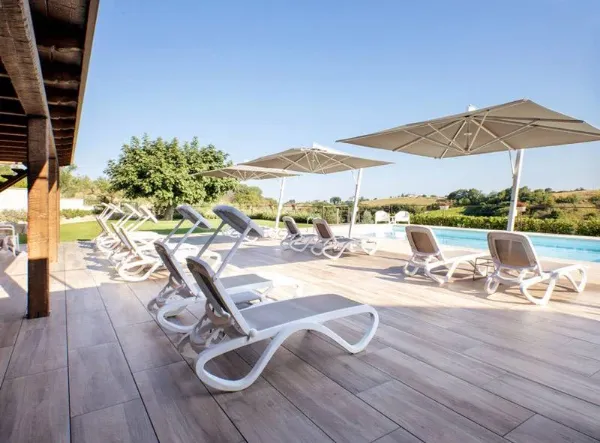
Light, texture, and surrounding furniture also affect the choice. A round table can sit comfortably among soft chairs, benches, and planting. A rectangular table can anchor a patio with straight paving lines, lounges arranged along one side, or a defined dining zone near the house. Neither shape is automatically better. Each one solves a different spatial problem.
Choosing with confidence
For compact, square, or curved patios, a round dining table often makes movement easier and conversation feel balanced. For long, narrow, or formal spaces, a rectangular table usually gives better direction and more seating flexibility. The final decision should come from the patio itself: its outline, its pinch points, its routes, and the number of people it needs to serve comfortably.
Good outdoor dining furniture does not need to dominate the patio. It should make the space easier to use. Measure the area, imagine chairs pulled out, and give people room to move. When the shape of the table matches the shape of the patio, the whole setting feels calmer, even before the first place setting goes down.